Table Of Content
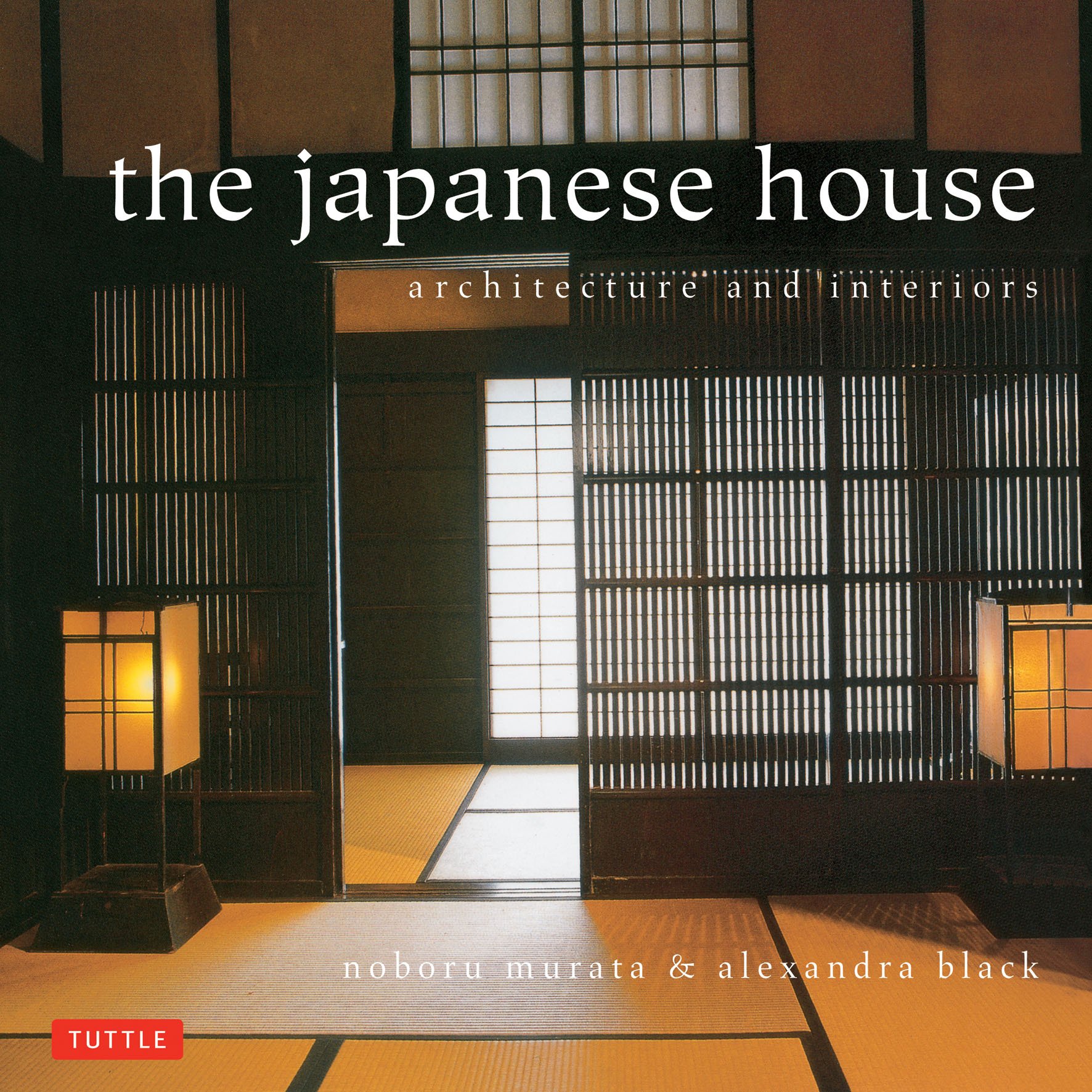
Fresh off the plane from a visit to Detroit, The Japanese House (real name Amber Bain) is in high spirits as NME meets her on a summer’s afternoon in a north London studio. It’s finally the long-awaited month that her second album ‘In The End It Always Does’ (out now), lands in the world, following her 2019 debut ‘Good At Falling’, which tracked both the highs and pitfalls of a relationship. If you've been reading and feeling a little jealous that you don’t live in one, there are ways to bring the Traditional Japanese House into your own home! Although it’s not easy or cheap to buy a traditional Japanese house, you can add elements to it to create your own version.
This Minimalist Japanese Home Pivots Around an Indoor Garden
We welcome close cooperation on Women, Peace, and Security and Women’s Economic Empowerment initiatives and efforts to promote women and girls’ full, equal, and meaningful participation and leadership in public life. We emphasize that our basic positions on Taiwan remain unchanged and reiterate the importance of maintaining peace and stability across the Taiwan Strait as an indispensable element of global security and prosperity. We emphasize the importance of all parties promoting open channels of communication and practical measures to reduce the risk of misunderstanding and miscalculation and to prevent conflict in the Indo-Pacific.
Support Us
Koichi Sato is the 11th head of a family of landowners in Akita, in the northern part of Honshu. Winters here are severe, and everything mantles over with thick snow from November to April. While the exterior and parts of this imposing edifice are built to withstand extreme weather conditions, parts of the interior have been design in the delicate aristocratic Shoin style. The relationship between the interior and the garden is very important in traditional Japanese architecture. The gardens are design to be viewed from the low vantage point of a person seated in the room or on a tatami mat.
The Japanese House: The Basic Elements of Traditional Japanese Residential Architecture.
‘Don’t Forget’: Maggie Rogers and The Japanese House perform at the AMP - Northwest Arkansas Democrat-Gazette
‘Don’t Forget’: Maggie Rogers and The Japanese House perform at the AMP.
Posted: Thu, 22 Feb 2024 08:00:00 GMT [source]
Her fifth EP, The LA Sessions (2019), featured live recordings of reimagined tracks from Good at Falling and Saw You in a Dream. Newsweek is committed to challenging conventional wisdom and finding connections in the search for common ground. We made it without “talentos” because we needed actors who could really fit the roles.

We will advance our commitment to operationalize data free flow with trust, including with respect to data security. We will also discuss the promotion of resilient and responsible seafood supply chains. As our countries strengthen our bilateral ties, we will continue to build our relationships with like-minded partners in the region.
Taylor Swift’s ‘Tortured Poets’ Becomes First Album to Get One Billion Streams on Spotify in a Single Week
She eventually played her most well-known song, “Touch Tank,” which the crowd seemed to know best from TikTok or something, whole-heartedly singing the viral chorus then falling silent during the verses like they’d gotten caught laughing too loud in a library. It was a little like a musical episode of Black Mirror, a strange micro-example of these technologically dominated times we find ourselves in. The design process for a normal-sized house should and usually does take six months to a year; we believe in giving the process enough time to develop naturally, with frequent communication between East Wind and the client. Most of the species of wood we use are not available at building supply yards. Some boards can take years to cure—an unreasonable amount of time for most clients to wait.
Sliding panels with glass on the exterior and shōji panels that can be slid up from the bottom are called yukimi-shōji (snow-viewing shōji). A ranma is a decorative open panel in an interior upper wall between the kamoi lintel and the ceiling, that allows light and ventilation. Kōshi-ranma consist of a simple lattice panel, while shōji-ranma are small sliding panels that can be opened and closed. Hisashi are additional eaves protruding over windows and entrances, constructed beneath the main roof to provide shade and protection from the rain. A roku-hisashi is a simple set of eaves cantilevered straight out from the wall, with a flat underside and slightly sloping upper side. The udegi (crossarm) hisashi has a more steeply sloping roof supported by crossarm braces.
‘The Simpsons’ Producer Apologizes for Surprise Death: ‘We Certainly Didn't Kill the Character Off Lightly’
The kokabe is a narrow horizontal section of wall that extends partway down from the ceiling and stops at about head-height. The section of partial wall that divides the tokonoma alcove from the rest of the room is a kokabe. The timber crosspiece at the base of the kokabe in front of the tokonoma is called an otoshigake.
Main navigation
This allowed the structures to have soft light inside, keeping the interiors layered and gentle, while the gaze is turned towards the much brighter garden outside. The same principles were employed in this project in order to play with shadow and light to create a comfortable domestic space. While all of the above had regional variations depending on local climate and the availability of materials, some common features may be identified. Those homes in rural areas, for example, were typically one-storey, built of wood, and raised off the ground by posts.
Meanwhile, on the first floor, a tatami mat room and the children's bedroom both feature large overhead windows that compliment the tactile surfaces with natural light. Japanese architect Erika Nakagawa defines her open plan weekend house in the lazy seaside town of Atami, an hour and a half south of Tokyo, as a renovation, rather than a completely new structure. The 458 sq m site, perched in the middle of a steep hairpin turn up the romantic sounding Peach (Momo) Mountain (Yama), already came with a surrounding wall made from rough fieldstones at the bottom and concrete cinder blocks at the top. Rather than tear everything down and start from scratch, Nakagawa's approach was to incorporate the existing wall and the garden into the design. Using the outer perimeter of the site as the defining outer walls of the building, Nakagawa added a large, slightly irregular shaped roof, resting on poured concrete pillars. Four glass walls enclose basic functions of the house, but it feels larger because of the floor to ceiling glass and overhang of the roof out in the surrounding garden.
But the new alliance structure is not, on its own, a long-term guarantor of regional peace and stability — and could even increase the risk of stumbling into a conflict. We once again unequivocally condemn the terror attacks by Hamas and others on October 7 of last year, and reaffirm Israel’s right to defend itself and its people consistent with international law. At the same time, we express our deep concern over the critical humanitarian situation in the Gaza Strip. We affirm the imperative of securing the release of all hostages held by Hamas, and emphasize that the deal to release hostages would bring an immediate and prolonged ceasefire in Gaza. We affirm the imperative of realizing an immediate and sustained ceasefire in Gaza over a period of at least six weeks as part of a deal that would release hostages held by Hamas and allow for delivery of essential additional humanitarian assistance to Palestinians in need. We underscore the urgent need to significantly increase deliveries of life-saving humanitarian assistance throughout Gaza and the crucial need to prevent regional escalation.


No comments:
Post a Comment